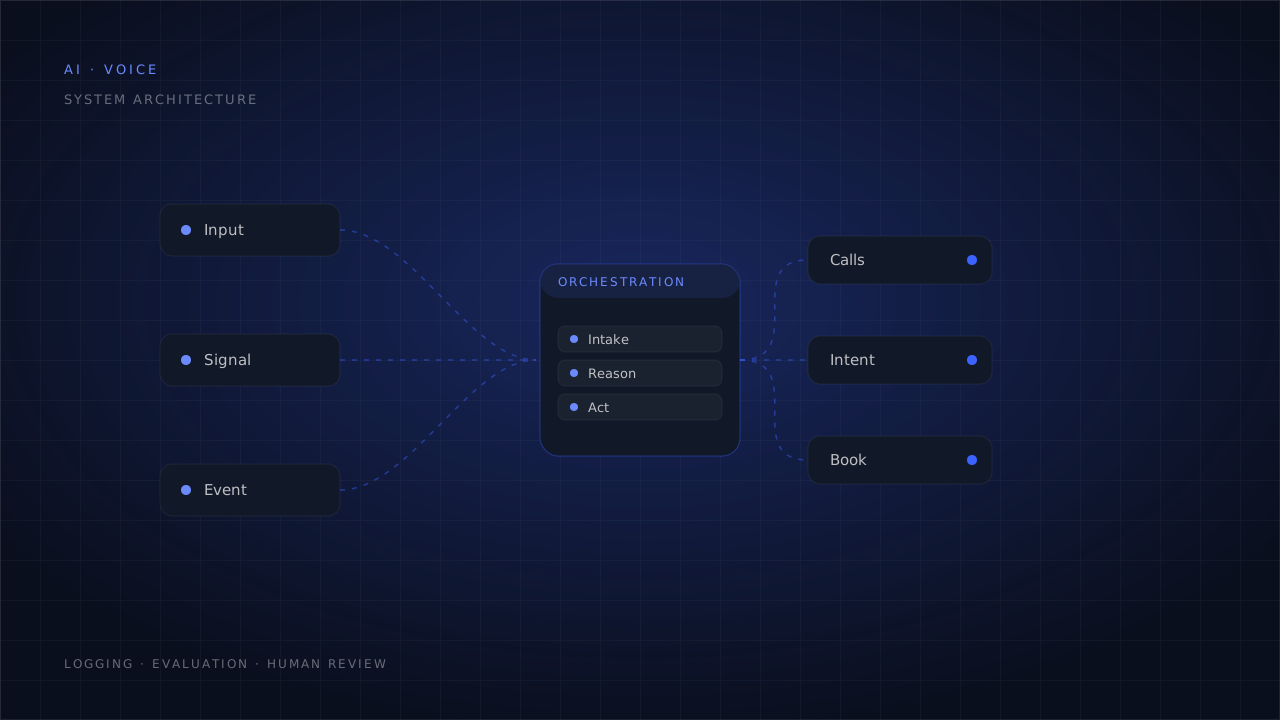
AI / Voice / Multi-Agent
VeriVoice
An intelligent multi-agent voice platform designed to automate business conversations and workflows.
- React
- Next.js
- Node.js
- AI
- +1
View Case Study
Automation
Unified Operations Orchestration
A consolidated orchestration layer replacing scattered scripts and disconnected no-code scenarios with monitored, recoverable workflows.
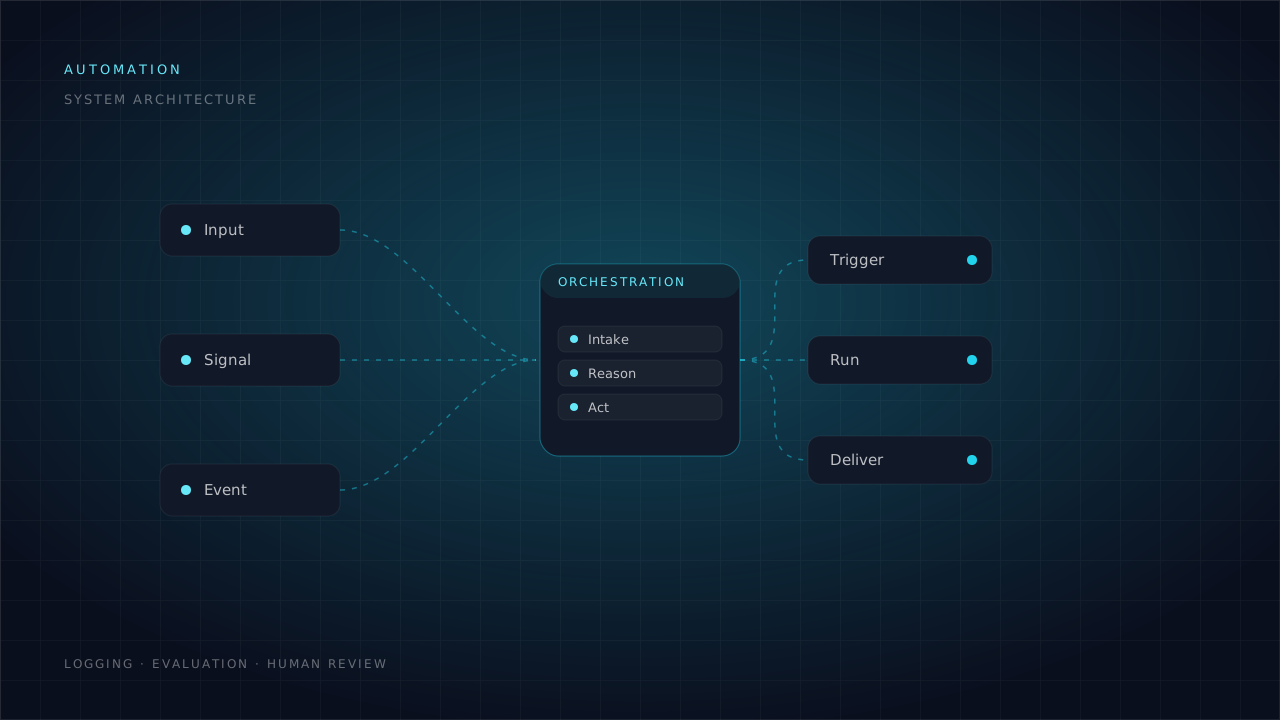
Overview
Automation had grown organically across four platforms, several personal accounts and a handful of scheduled scripts. Nothing was versioned, failures were silent, and the person who built most of it had left. We rebuilt the estate as one orchestrated system with version control, retries, dead-letter handling and alerting — and documented every workflow so the team can maintain it themselves.
Challenge
Nobody could answer what automation existed, where it ran or whether it had worked last night. Failures surfaced when a customer complained.
Automation was spread across four platforms, some of it in personal accounts.
No version history, so a broken change could not be identified or rolled back.
Failures were silent; the first signal was usually a customer or a missing record.
Retries were unsafe, so operators avoided them and fixed things by hand instead.
Solution
We inventoried everything, rebuilt it on one self-hosted orchestrator, and treated workflows as software: versioned, reviewed, deployed and monitored.
Audited and documented every existing automation before migrating any of it.
Consolidated onto self-hosted n8n with definitions in git and deployment through CI.
Made every step idempotent so retries and replays are safe by construction.
Added a dead-letter queue with full payload capture and one-click replay.
Wired alerting to the owning team with runbooks written for each failure mode.
Capabilities
What Workflow Automation System does in day-to-day use.
Every workflow definition lives in git and deploys through the same pipeline as application code.
Idempotency keys throughout, so a retry can never double-charge, double-send or double-create.
Failed runs are captured with full payload and can be replayed once the cause is fixed.
Per-integration throttling and exponential backoff so third-party limits degrade rather than break.
Failures route to the responsible team with a written runbook attached to the notification.
Every execution searchable by entity, with timing, payload and outcome retained.
Stack
The tools this system runs on, grouped by the role they play.
Architecture
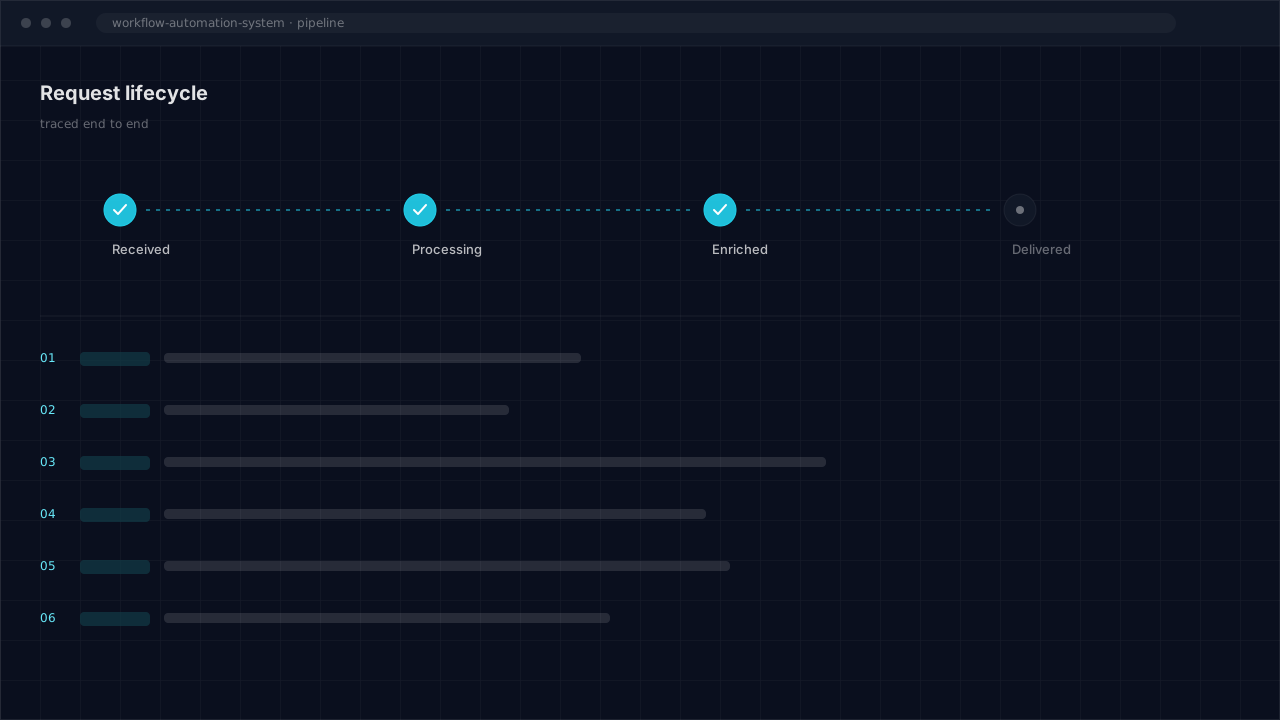
The path a single request takes through the system, end to end.
Webhook, schedule or queue message enters the orchestrator.
Payload validated and assigned an idempotency key before any side effect.
Steps execute with per-integration throttling and backoff.
Transient failures retry; permanent ones land in the dead-letter queue.
Outcome recorded, owning team alerted with the relevant runbook.
Outcome
What changed for the business after launch.
4 → 1
Platforms consolidated
One orchestrator, one deployment path, one place to look.
99.6%
Workflow success rate
Measured over the first quarter after migration.
< 3 min
Mean time to detection
Alerting replaced customer reports as the first failure signal.
31
Workflows documented
Each with an owner, a diagram and a recovery runbook.
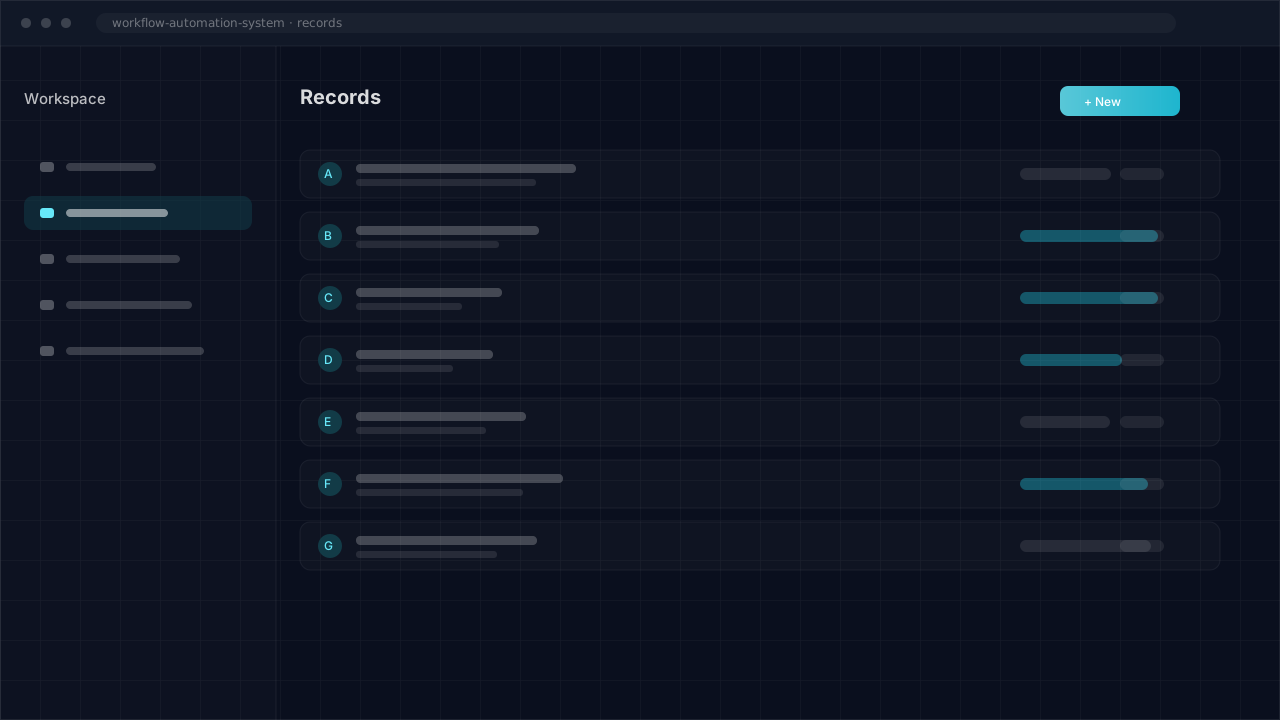
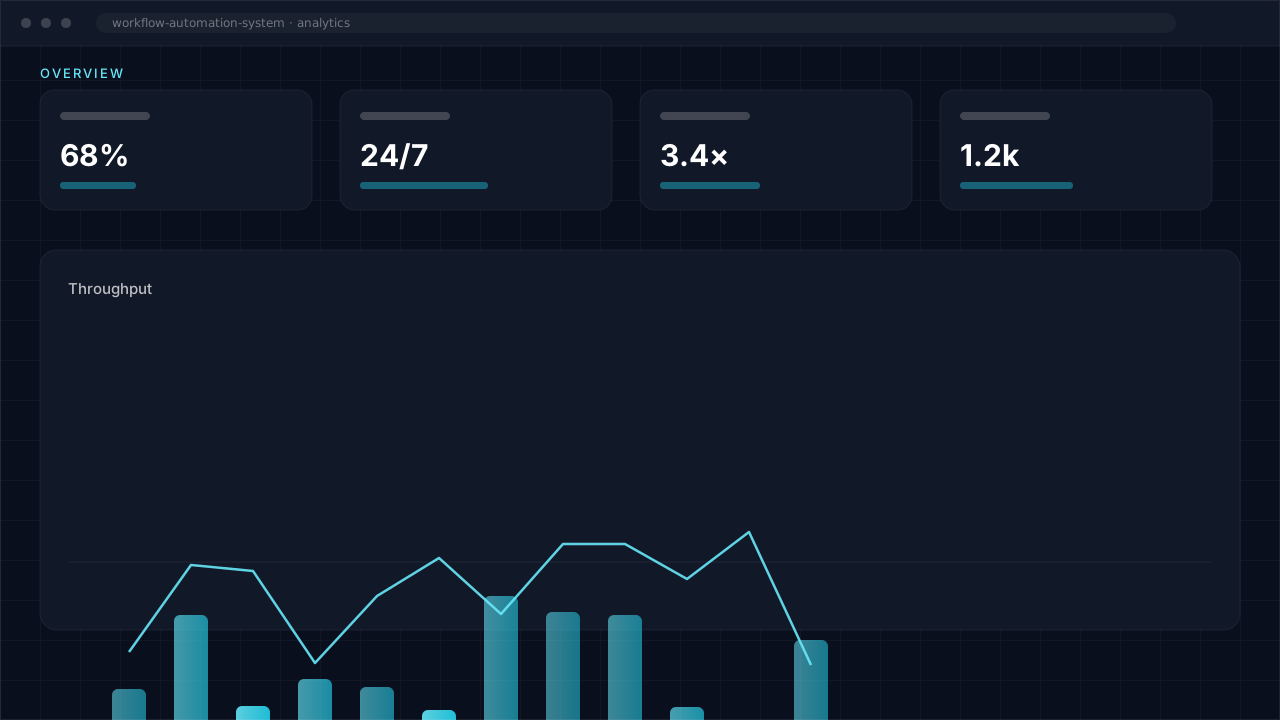
Interface
Screens from the delivered system.
More work
Other systems built on similar foundations.
AI / Voice / Multi-Agent
An intelligent multi-agent voice platform designed to automate business conversations and workflows.
View Case Study
AI / Automation
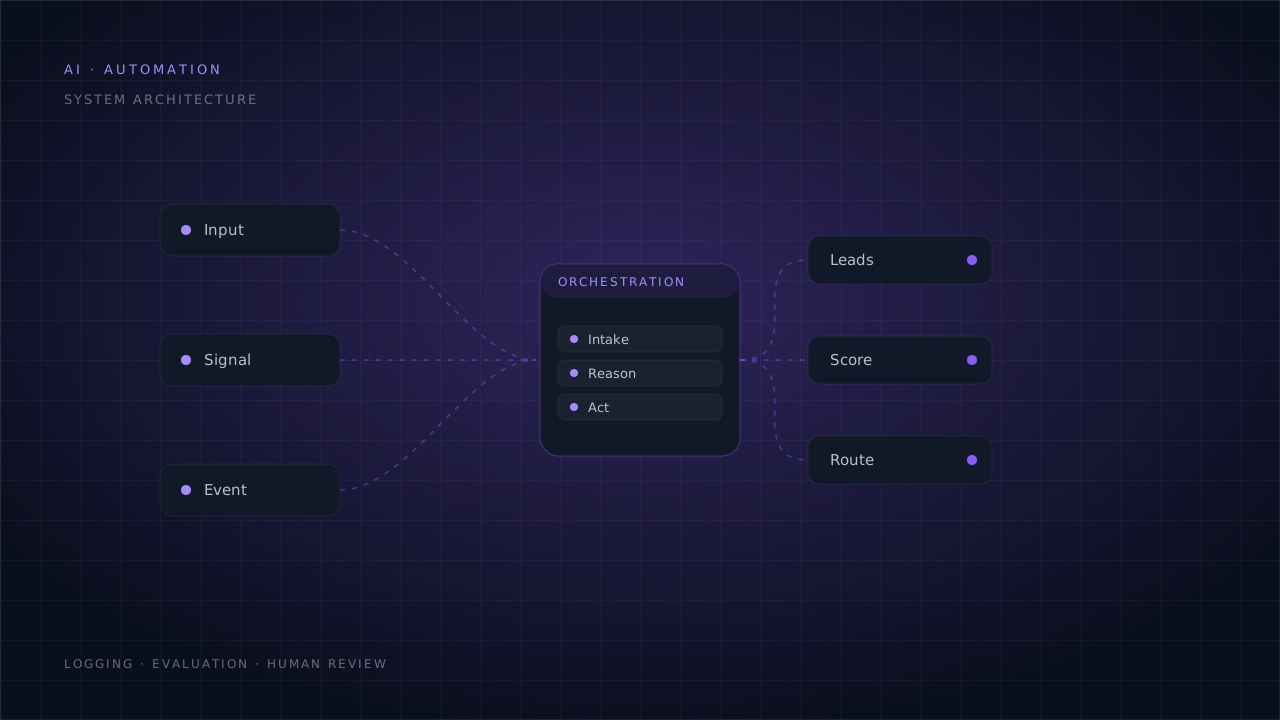
An automated qualification and outreach engine that scores inbound leads, enriches them and routes each to the right owner within minutes.
View Case Study
Next step
Tell us what your business needs to automate and we'll map out a practical build.
hello@devrox.comWe reply to every enquiry within one business day.